
CamelCamelCamel Alternative — Price Tracking Beyond Amazon
Looking for a CamelCamelCamel alternative that works beyond Amazon? An honest comparison: what CCC does best, where it ends, and what to use instead.
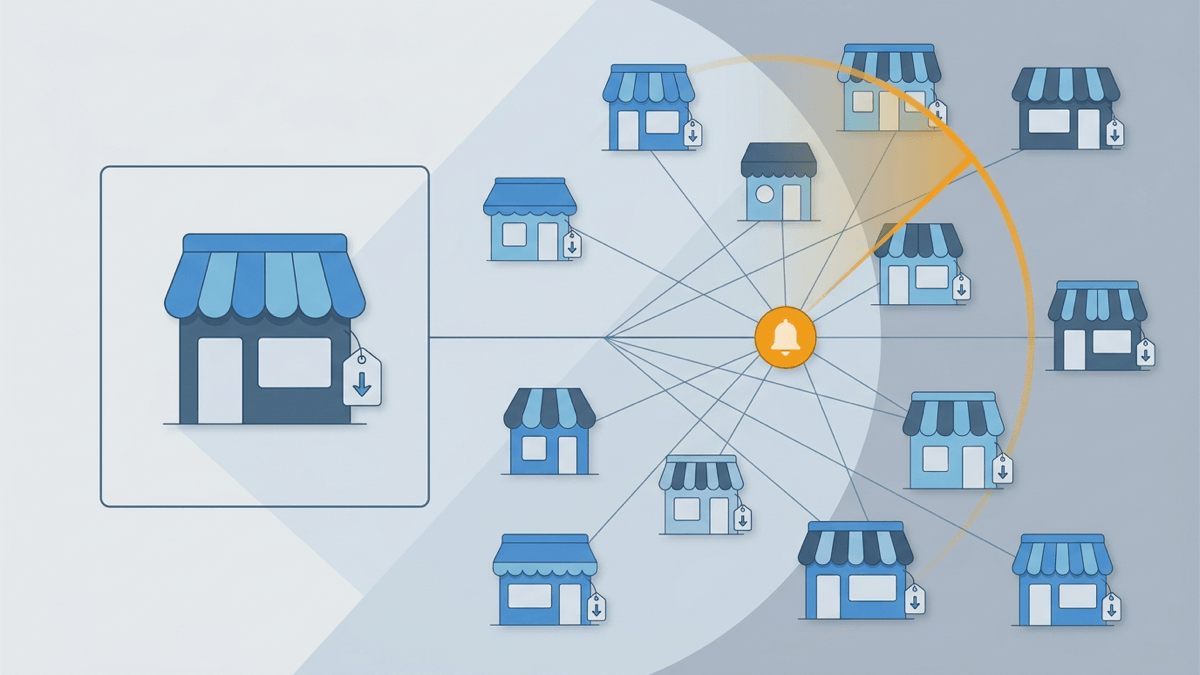
CamelCamelCamel describes itself as "a free Amazon price tracker" — and that one word, Amazon, is almost certainly why you're searching for a CamelCamelCamel alternative. Not because the tool is bad: within Amazon it is genuinely hard to beat, and this comparison will say so plainly. But the moment the thing you want is sold by a brand's own store, a regional marketplace, or any shop that isn't Amazon, CCC has nothing to show you — by design, not by accident. By the end of this post you'll know exactly what CamelCamelCamel and Keepa still do best, what a universal price tracker does differently, and which tool fits which purchase — including the honest trade-offs of each.
The short answer: CamelCamelCamel and Keepa are Amazon-only price trackers with deep historical archives for Amazon listings. If you shop beyond Amazon, you need a universal tracker — a tool like AlarmBot that reads any product page in your browser, works in any currency, and alerts you through browser, email, Telegram, or Discord. The trade-off: a universal tracker builds price history from the day you add a product, instead of handing you years of Amazon-only data. Many careful shoppers use both.
What CamelCamelCamel Does Well
A comparison that pretends the incumbent has no strengths isn't a comparison, so here is what CCC gets right — checked against its own homepage(opens in a new tab) in August 2026:
- It's free. Price watches, history charts, and alerts, with no paid tier standing between you and the core product.
- Deep Amazon price history. CCC publishes price history charts for millions of Amazon products — an archive of past prices that no tool starting today can reconstruct after the fact.
- Email price watches. Set a desired price on any Amazon listing and get an email when it drops there.
- The Camelizer. Its browser extension overlays the price history chart directly on the Amazon page you're viewing.
- Multiple Amazon country sites. A country selector covers Amazon's regional storefronts beyond amazon.com.
If every purchase you'll ever track lives on Amazon, you can stop reading here — CamelCamelCamel is a good tool for that job, and switching would gain you nothing.
Where CamelCamelCamel Ends
The limitation is structural. CCC is built on Amazon's product catalog: its identifiers, its page structure, its regional storefronts. That architecture is exactly what makes the deep history possible — and exactly what makes everything outside Amazon invisible. There is no partial support to speak of: a Shopify store, a direct-to-consumer brand, a local electronics retailer, a marketplace in another country — none of them exist as far as an Amazon-catalog tracker is concerned.
That matters more than it used to, because the deal you miss is rarely on the marketplace you were already watching. Brand-direct stores run their own promotions. Regional retailers price against local demand. Niche shops discount without announcing it anywhere. If your shopping spreads across the web — and most people's does — an Amazon-only tracker watches a fraction of it, and the rest of the web goes untracked.
What to Look For in an Alternative
Before naming a replacement, here are the criteria this comparison uses — so you can apply them to any tool, ours included:
- Coverage. Does it work on the stores you actually buy from, or a fixed list?
- History. Does it have past data, build its own, or neither?
- Alerting. Where do alerts arrive, and can you set conditions (target price, percentage drop) rather than getting pinged on every change?
- Currency handling. Does a listing in €, £, ₺, or ¥ stay in its own currency, or get converted under you?
- Honest limits. Every architecture trades something away. A tool that won't name its trade-off is hiding it.
AlarmBot: A Price Tracker for the Whole Web
AlarmBot starts from the opposite design decision: instead of integrating with one marketplace's catalog, it reads the product page the way you do. A browser extension finds the price on the page — or lets you click the exact element yourself — and watches that spot. No product ID, no store partnership, no supported-sites list. If a price is visible in your browser, it can be tracked.
That single choice is what an Amazon-only tracker cannot copy without a rebuild:
- Any store, any country, any currency. A listing priced in ₺ or ¥ is tracked in ₺ or ¥. Your target price lives in the store's own currency, so there's no conversion drift to second-guess.
- Any element, not just prices. The same selector can watch a stock badge, a shipping cost, or a coupon field — useful for restocks and availability, not just discounts.
- Conditional alerts. Alert on a target price, a percentage drop, or any change at all — through browser notifications, email, Telegram, or Discord.
- Your own price history. Every change is recorded from the day you add the track, with the low, the high, and the movement since you started — the record that tells you whether the next "sale" is actually a sale. The free plan keeps 90 days of change history per track.
The Honest Trade-Offs
Every architecture trades something away, and the fifth criterion above — honest limits — applies to us too:
- No pre-loaded archive. AlarmBot cannot show you what a product cost before you started tracking it. History builds forward from day one. For an Amazon listing with years of CCC data, CCC's chart is simply better — use it.
- Checks run through your browser. AlarmBot checks pages on a schedule while your browser is open, rather than from an always-on server. Leave the browser running and it works in the background; a machine that's off checks nothing. CamelCamelCamel's Amazon checks don't depend on your browser at all.
- Free plan limits. The free plan covers 20 tracked products, checks as often as every 20 minutes, and keeps 90 days of history — a real watchlist, not a teaser, but a limit worth knowing upfront.
AlarmBot vs CamelCamelCamel
| AlarmBot | Competitor | |
|---|---|---|
| Amazon product pages | ||
| Every other website | ||
| Price | Free | Free |
| Historical Amazon price archive | ||
| Price history for non-Amazon stores | Builds from day one | |
| Original currency preserved (€, £, ₺, ¥) | Amazon regions only | |
| Track stock, shipping, or any page element | ||
| Alert channels | Browser, email, Telegram, Discord | Email |
| Checks run while your browser is closed |
The pattern in the table is the whole story: on Amazon, with history that predates you, CamelCamelCamel wins. Everywhere else — coverage, currencies, non-price elements, alert channels — the universal design wins, because CCC doesn't play on that field at all.
What About Keepa?
Keepa is the other name in every CamelCamelCamel conversation, and the same fork applies. Keepa's homepage(opens in a new tab) calls it an "Amazon Price Tracker" and claims price history charts for over 7 billion Amazon products — a bigger catalog than CCC cites — plus international Amazon price comparison across its supported Amazon storefronts and mobile apps alongside the browser extension. Its Pro Data tier (product finder, seller lookup, sales-rank tooling) is aimed at Amazon sellers doing product research, which is a different job than watching your own wishlist.
For a shopper, the practical summary: Keepa is a stronger, more data-heavy Amazon tracker, and it is still an Amazon tracker. As a Keepa alternative for stores beyond Amazon, the answer is the same as for CCC — you need a tool that reads pages instead of catalogs.
The Realistic Setup: Use Both
This is a comparison post that ends by not asking you to switch. If you buy on Amazon, keep CamelCamelCamel or Keepa there — the historical archive is real value that no forward-building tracker can replicate. Add AlarmBot for everything those tools can't see: the brand's own store, the local retailer, the marketplace in your country, the restock you're waiting on. The two kinds of tool don't compete for the same pages; they cover each other's blind spots.
Setting that up takes a few minutes: install the extension, open any product page, and let it find the price — or pick the element yourself. If you're new to price alerts entirely, the price drop alerts guide walks through your first track step by step.
Common Questions
Does CamelCamelCamel work on stores other than Amazon?
No. CamelCamelCamel describes itself as an Amazon price tracker and is built on Amazon's catalog, with a country selector for Amazon's regional sites. It has no support for non-Amazon stores — for those you need a universal tracker that reads the product page directly.
Is CamelCamelCamel free?
Yes — as of August 2026 its homepage describes it as a free Amazon price tracker, with price watches, history charts, and the Camelizer browser extension available at no cost.
What is the best CamelCamelCamel alternative for non-Amazon stores?
A universal price tracker — one that reads the product page in your browser instead of querying Amazon's catalog. AlarmBot works this way: it tracks any store in any currency, watches stock and shipping as well as prices, and alerts via browser, email, Telegram, or Discord. The trade-off is that history builds from the day you start tracking.
Is Keepa better than CamelCamelCamel?
For Amazon, Keepa cites a larger catalog (over 7 billion products, per its homepage) and adds international Amazon comparison and seller-oriented research tools. Both are Amazon-only, so for any other store the question doesn't apply — neither covers it.
Can I import my Amazon price history into AlarmBot?
No. AlarmBot records prices from the moment you add a track; it cannot backfill data it never collected. Keep CamelCamelCamel or Keepa for Amazon listings where the historical chart matters, and use AlarmBot for the stores they can't see.
CamelCamelCamel, the Camelizer, Keepa, and Amazon are trademarks of their respective owners, used here for identification and comparison only. AlarmBot is not affiliated with, endorsed by, or sponsored by any company named. Competitor descriptions were checked against the cited pages on 26 August 2026; features and terms may change — verify on the competitor's own site before relying on them.